
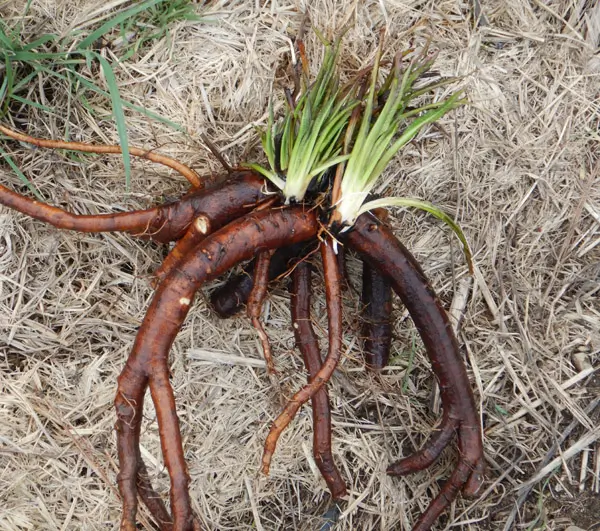


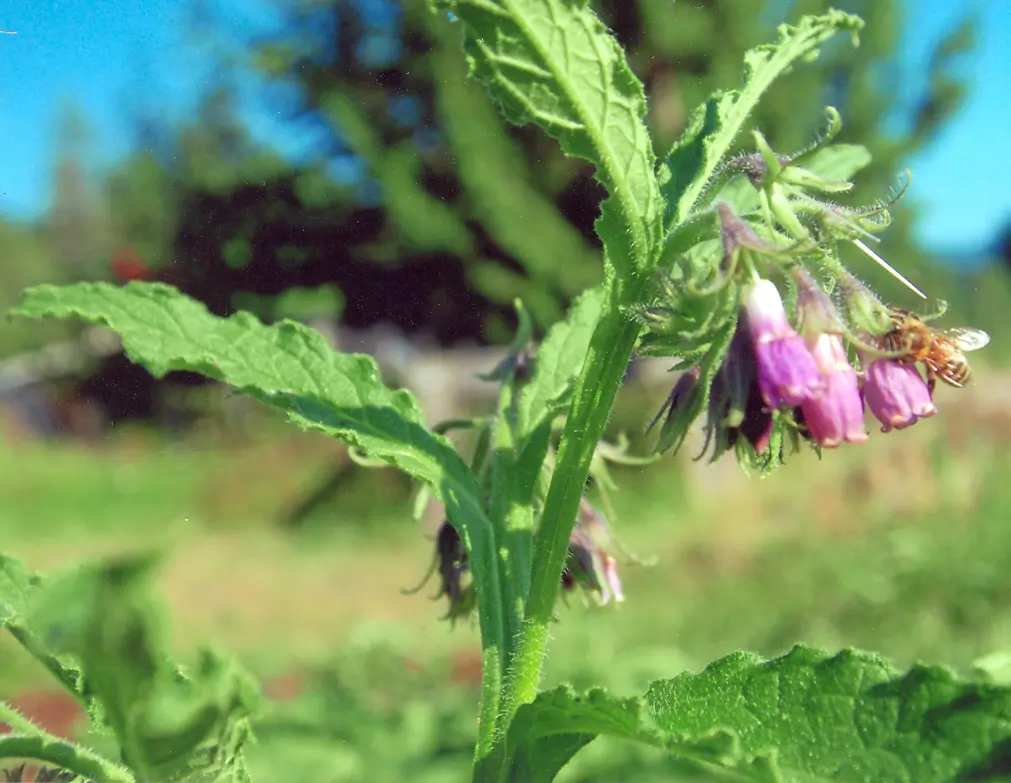
Comfrey, True root crown cutting, Organic
Symphytum officinale
Price range: $9.10 through $573.17
Dormant live roots ship year-round.
Please note: True comfrey root crown cuttings are shipped year ’round. When you order them, you can expect to receive your roots via us mail about 2 weeks from the order date. If you require a different shipping window, please let us know by using the “order comments” field at checkout. When planted in the garden or in a large pot by completely covering the root cutting with soil, comfrey roots will grow for anyone, any time.
Family: Borage (Boraginacea)
Hardy in Zones 3 to 9
Herbaceous perennial native to Europe. True Comfrey is the original herb as detailed in all the ancient literature. Traditional usage (TWM): used externally to speed healing. Source of allantoin, which proliferates cell growth, making things grow faster, which is one of the reasons it is so often employed in an orchard and garden context–it is the quintessential all-around companion plant. True Comfrey prefers full sun and regular garden soil. Good drainage is helpful (add sand and organic matter to clayey soil) and frequent watering is also helpful. To plant a true comfrey root, find a spot with good sun and rich soil. Plant the root with root down and crown up, burying the crown by at least an inch of soil. Water the spot. The Comfrey will soon send leaves up through the soil surface and… you’re off! After the plant reaches the late flowering stage, simply cut it back and lay the leaves back down on the crown. It will regrow through its own mulch.
Crown Cutting, Certified Organically Grown
Uses: Comfrey is commonly used in permaculture as a companion plant to fruit trees. In the nursery, we have great results making the fresh leaves into biodynamic tea, which we apply to our plants in a pot to increase vitality, growth, and to green up all those leaves! Excellent ingredient for compost piles–fresh leaves compost fast and make a nitrogen-rich compost! Fresh, rubbed leaves fed to ruminants, pigs and chickens to increase health and as a protein-rich nutrient dense feed. Traditional usage of fresh or dried leaves or roots (TWM): used externally to speed healing. Source of cell-proliferating molecule alantoin.
What is a root crown cutting? A chunk of the crown of the plant (the blocky part above the taproots), often with a piece of the taproot attached. Size is variable. We give generous cuttings, from 2 to 6 inches long, generally as big around as your thumb, often larger, sometimes smaller–a mix. These are the SAME CUTTINGS that we use for replanting our own fields, and horticulturally speaking, this is the best size and shape to replant in order to get fast results. This is NOT just a piece of the taproot, which generally takes longer to grow to a full sized plant than the more desirable crown cutting.
How to plant: Space the plants at least 2 feet apart. Comfrey prefers rich soil of medium moisture in the sun to part shade. It is a heavy feeder and will reach monumental size if given composted manure under the cutting at transplant and/or around the crown of the plant during the growth cycle. To plant the cutting, prepare a weed-free area of 1 foot square, fertilize the spot with compost, then bury the cutting in the center of that spot, completely covering the cutting with soil to the depth of 1 or 2 inches. Do not leave the cutting exposed–let it sprout spontaneously up through the soil. This will take about 2 weeks–you will see the bright green leaves emerging.
How to care for comfrey plants: Keep the planting reasonably well watered. It works very nicely to mulch the plant with straw, other high-carbon mulch, or even its own leaves, cut from the plant and laid back down around the crown. This is the standard way to take care of comfrey–when it finishes flowering and starts to keel over, cut it down and use the leaves for any of the multitude of applications comfrey leaves are good for, or simply lay the leaves back down on the crown of the plant and let it grow back through its own mulch. In the temperate zone, this cycle usually occurs 2 or three times per summer. The only way to get rid of comfrey is to stop watering it and let the plant dry out, or to drown the plant in water. Otherwise, the plant will stay around. Many people plant comfrey in the orchard, as it brings up minerals from deep within the earth that are good for fruit trees, and because it nourishes the trees with its fallen and composted leaves. The above directions are suitable for comfrey culture in orchards, and traditionally at least one plant is planted per tree. You can mow over the plants if necessary–they will re-emerge.
For more information on use of comfrey in the home garden and for use of comfrey in herbal medicine, including appropriate directions for safe usage in home health care, please read “Growing Plant Medicine” and “Making Plant Medicine.”
You may also like…
-
Yarrow, Official
Achillea millefoliumpotted plantFrom $13.60Choose size This product has multiple variants. The options may be chosen on the product page -
Nettles, Stinging potted plant, Organic
Urtica dioicaFrom $13.60Choose size This product has multiple variants. The options may be chosen on the product page -
Yarrow, Official
Achillea millefoliumseedsFrom $5.14Choose size This product has multiple variants. The options may be chosen on the product page -
“Making Plant Medicine,” Fourth Edition by Richo Cech
Original price was: $24.95.$19.95Current price is: $19.95. Add to cart -
Nettles, Stinging
Urtica dioicaseedsFrom $5.14Choose size This product has multiple variants. The options may be chosen on the product page



Michele Steinert (verified buyer) –
Hi, I am in Santa Rosa, CA and have a hillside I would love to plant comfrey on. Do you think that would work? Love this plant. Have been buying it from you guys for years.
Upvote if this was helpful (0) Downvote if this was not helpful (0) Watch Unwatch Flag for removal
Richo Cech –
Hi Michele, It will work fine in terms of zone and microsite–you would have to water it to keep it aerial in the summer. Richo
Upvote if this was helpful (0) Downvote if this was not helpful (0) Flag for removal
Barry Mouw –
The crowns arrived fresh, well packaged, and ready to grow.
Upvote if this was helpful (0) Downvote if this was not helpful (0) Watch Unwatch Flag for removal
FATIMA –
I TAP MY HAT TO YOUR TEAM FOR THE UNSHAKABLE INTEGRITY, AND THE RESILIENCE TO GROW MEDICINALS HERBS IN THE MIDST OF ALL THIS CHAOS. YOUR PLANTS REFLECT THAT RESILIENCE. BRAVO AND WISHING YOU THE BEST OF LUCKS
Upvote if this was helpful (0) Downvote if this was not helpful (0) Watch Unwatch Flag for removal
Richo Cech –
THank you Fatima, wishing you the best, Richo
Upvote if this was helpful (0) Downvote if this was not helpful (0) Flag for removal
Gillian –
Anything I order has crazy germination rates, even the seeds that arent supposed to germinate, geeminates. All cutting s and roots arrive happy and in great shape
Upvote if this was helpful (0) Downvote if this was not helpful (0) Watch Unwatch Flag for removal
Carolina Alcid (verified buyer) –
I received my comfrey roots and live plants, and they look incredibly healthy! Haley wrapped everything so carefully. I’m beyond excited to begin my journey toward becoming a clinical herbalist 🌿 I’ll definitely be buying more plants and seeds from Haley. Thank you!
Upvote if this was helpful (0) Downvote if this was not helpful (0) Watch Unwatch Flag for removal
Nadia M Queiroz –
Envia para o Brasil?No Ceara
Upvote if this was helpful (0) Downvote if this was not helpful (0) Watch Unwatch Flag for removal
Richo Cech –
Lo siento, las semillas no llegan a Brasil.
Upvote if this was helpful (0) Downvote if this was not helpful (0) Flag for removal
April (verified buyer) –
I ordered a single root crown cutting a couple of years ago. It popped right up where I planted it. I use it for mulch (chop and drop), garden tea, medicinal tea, topical medicinal formulas, livestock feed for goats, pigs, cows, sheep, chickens and ducks, and I love to share it with others. Everyone needs True Comfrey!
Upvote if this was helpful (0) Downvote if this was not helpful (0) Watch Unwatch Flag for removal
Triesha –
Richo,
I’m looking into adding comfrey in our orchard area, but I have a couple questions. First, we have some of the happiest gophers (or whatever) in the world that will once again be delighted by our efforts in this space. Would it be possible or of any use to fashion gopher baskets to protect the plants? From the comfrey being totally eaten up or by having the root pieces distributed all over by gophers? And would this true or the Russian make a difference? Seriously, the gophers have basically eaten all the trees we planted – very discouraging! Hence my researching gopher baskets for future plantings.
I am in zone 6a, in north east Washington state.
Thank you!
Upvote if this was helpful (0) Downvote if this was not helpful (0) Watch Unwatch Flag for removal
Richo Cech –
we have tons of gophers and they leave the comfrey alone. i just don’t think this will be a problem. you can try a gopher basket if you like, it should work equally well for true and russian
Upvote if this was helpful (0) Downvote if this was not helpful (0) Flag for removal
Ian Lawson (verified buyer) –
I ordered some crown cuttings for my home fruit trees a couple years ago and they have all survived and grown wonderfully. When planted in full sun with ample compost the plants quickly erupted from the ground and produced huge leaves and beautiful flowers. They can be cut down to the ground and will regrow several times during the year. I also planted a couple crowns in an area with poor soil, less sun, and no compost and though they only produced a few leaves the first year, by the second year the plants showed strong growth. And this was with me giving them zero attention – no watering other than what they got from the nearby fruit trees and no additional fertilizer. This is in CA zone 9b. Such an easy and rewarding plant to grow. The bees love it too, especially carpenter bees which are so important for our ecosystem.
Upvote if this was helpful (4) Downvote if this was not helpful (0) Watch Unwatch Flag for removal
Richo Cech –
thank you for sharing this valuable info. methinks the comfrey in the poorer soil did better the second year because. . . it improved the soil!
Upvote if this was helpful (0) Downvote if this was not helpful (0) Flag for removal
Melody –
All the comfrey roots I ordered last spring did well, I only have 1 of these, but many of the russian comfrey roots. I now have a ligament injury and am wanting to make some poultices. How much of the root can be harvested now for use or how much must be left so that it grows back in the spring? Also, can the roots of the russian one be used for that also?
Upvote if this was helpful (0) Downvote if this was not helpful (0) Watch Unwatch Flag for removal
Richo Cech –
Hi Melody,
Thanks for staying in touch, and for taking good care of those plants. Both true comfrey and russian comfrey are applied externally as poultices with equal efficacy. Here’s a youtube to watch: https://www.youtube.com/watch?v=6FKDt-iUaLM
Regarding digging and replanting, the fall is a good time to do this. You’ll probablty be surprised to see how big the roots have grown. Unless you carefully remove all of the root at digging, the plant is going to come back in the same spot, so fill the divot with compost and keep the weeds back and you’ll soon see it again. For replanting to a distance, any piece of the root thumb size or larger is going to regrow. Pieces of the crown are more immediately vigorous and are generally preferred. Always completely bury the root when you replant–it must be covered in soil or compost. richo
Upvote if this was helpful (2) Downvote if this was not helpful (0) Flag for removal
Tristan (verified buyer) –
One of the comfrey cuttings I planted I believe last summer (currently right behind a row of Hopi sunflowers) and they really shot up a bunch within the last month from when they were just emerging. It’s really cool and enjoyable to just plant root cuttings for nice, quick and healthy plant starts. Awesome!
Upvote if this was helpful (1) Downvote if this was not helpful (0) Watch Unwatch Flag for removal
Jolie –
I got 3 root cuttings last spring of 2023. They grew just fine last summer, and took off like wildfire one year later. Large, vibrant plants. I made comfrey salve last autumn and plan to make even more this year. Excellent medicinal value. Highly recommend for every gardener, especially those who are keen on natural healing methods. WA state, zone 8b.
Upvote if this was helpful (0) Downvote if this was not helpful (0) Watch Unwatch Flag for removal
Wendy Ribelin (verified buyer) –
This is the second year for this plant, and it has already begun to spread. It is huge and such a nice addition to my garden.
Upvote if this was helpful (1) Downvote if this was not helpful (0) Watch Unwatch Flag for removal
Ian (verified buyer) –
Could I divide this up into 2 or 3 pieces upon receiving or plant it as one?
Upvote if this was helpful (0) Downvote if this was not helpful (0) Watch Unwatch Flag for removal
Richo Cech –
Hello Ian, They are prepared to plant as one. Richo
Upvote if this was helpful (0) Downvote if this was not helpful (0) Flag for removal
jmfsenior (verified buyer) –
Feel in love with her as soon as I saw her. Darling little crown healthy as can be. In a couple weeks green and thriving in a gulf coaster spring. Now I’m wondering why it took me so long to add her to the garden.
Upvote if this was helpful (0) Downvote if this was not helpful (0) Watch Unwatch Flag for removal
Richo Cech –
I thought you were going to make a poem, so i will, because. . . I must.
My True Comfrey Plant
Pretty little darling,
Pointed leaves unfurling,
Fell in love as soon as I saw her
Thriving like a gulf coaster
There in her pot and saucer.
I let it go so long
So we could both be strong.
Richo
Upvote if this was helpful (4) Downvote if this was not helpful (0) Flag for removal
Margaret –
Beautifull.
Upvote if this was helpful (0) Downvote if this was not helpful (0) Flag for removal
itatane (verified buyer) –
Owing to the uncertainties of NEONWPA weather, I started it in my 47 degree basement under an LED shop light, in a 1 gallon pail. Kept it evenly watered every few days, and it is doing exceedingly well. (6 inch sprouts above the soil!) My only regret is that I did not order more root cuttings.
Upvote if this was helpful (0) Downvote if this was not helpful (0) Watch Unwatch Flag for removal
spice.farm (verified buyer) –
As usual, super healthy crowns arrived in mailbox yesterday morning, in the earth again yesterday afternoon. Looking forward to watching these beauties grow into my orchard
Upvote if this was helpful (0) Downvote if this was not helpful (0) Watch Unwatch Flag for removal
Richo Cech –
hello spice, thanks for taking the time to write. we’re super stoked to be a small part of integrating comfrey into your orchard. thanks for caring for the land, richo
Upvote if this was helpful (0) Downvote if this was not helpful (0) Flag for removal
Melissa (verified buyer) –
I was negligent and didn’t mark where I planted my cutting Then, a few days later, I dug it up accidentally and broke off part of the new growth! But now I have TWO plants coming up. These cuttings are ditz-proof. And, they are doing great in partial shade in zone 9B.
Upvote if this was helpful (1) Downvote if this was not helpful (0) Watch Unwatch Flag for removal
Robert –
I read on the Russian comfrey comments you recommend doing true comfrey in zone 10a (southern california) because Russian comfrey goes flat in hotter weather. I wanted to confirm you’d recommend this true comfrey which says up to zone 8 vs Russian says up to zone 9.
Thank you!
Upvote if this was helpful (0) Downvote if this was not helpful (0) Flag for removal
Richo Cech –
Hi Robert, Thanks for writing. Questions like this are always so helpful to all of us. Zone recommendations are a general guide and meant to reassure the timid. Advanced growers tend to find ways around limitations, within reason, specifically by employing microsite planting. In a Z 10 I would plant the true comfrey in a shaded area, which makes sense when using it under trees to improve their health.. This fall I was standing in a dense comfrey patch reaching up to pluck clusters of plump red apples from a tree, sometimes as many as 4 to a twig, pulling them down 2 at a time, I have large hands, and putting them in a deep flat without bruising. The comfrey around my knees, the red orbs against the blue sky, it all suddenly made sense–the comfrey was responsible for the high yield and the unblemished fruit. I checked the zonal recommendations online and fixed one error. I checked pages 255 to 256 of “Growing Plant Medicine Vol 1” and found russian comfrey recommended for z 4 to 8 and true comfrey for z 3 to 9, which does make sense. richo
Upvote if this was helpful (0) Downvote if this was not helpful (0) Flag for removal
JoAnn McCulley (verified buyer) –
These came very healthy and nicely packed. I can’t wait to see them grow.
Upvote if this was helpful (0) Downvote if this was not helpful (0) Watch Unwatch Flag for removal
Dustin Bryant (verified buyer) –
Thank you for the option to purchase these amazing True Comfrey live roots. I followed the the instructions that came with it, and while I am preparing my garden, I planted this live root into a 1 gallon pot with a fairly rich mulch/soil and to make sure it remains moist with good draining. I can say, this plant is very hearty and has been growing superbly. Thank you again.
Upvote if this was helpful (0) Downvote if this was not helpful (0) Watch Unwatch Flag for removal
Richo Cech –
Hi Dustin, Comfrey is the quintessential companion to almost any tree or vegetable, because it breaks up hardpan, builds soil and promotes the growth of other plants nearby (allantoin effect). The one caveat is that if you dig through and disturb the comfrey roots, then you may end up with–only comfrey. Therefore if you plant your comfrey in a border to the garden and plant other things, tomatoes and carrots, sure, or beans, or what have you, then you can cultivate freely around the garden plants and not worry about the comfrey taking over carrot habitat. Around orchard trees, comfrey can just grow and spread right underneath and since it uses a different horizon then it will coexist and man is this helpful! richo
Upvote if this was helpful (1) Downvote if this was not helpful (0) Flag for removal
Claire J. Barnwell (verified buyer) –
My Comfrey is emerging and looks so healthy! Can’t wait to see the whole plant! All of the plants I’ve received from you are healthy, very well packaged for shipping and are doing very well. You folks are fantastic!
Upvote if this was helpful (0) Downvote if this was not helpful (0) Watch Unwatch Flag for removal
Richo Cech –
hi claire, yes, pointy-leaved true comfrey coming up after being buried well beneath surface of soil and mulched. way to go! r
Upvote if this was helpful (1) Downvote if this was not helpful (0) Flag for removal
Marjorie Boggess (verified buyer) –
I’d never had success growing comfrey from seeds, so I thought I’d give the cuttings a try. I went with five instead of one, “just in case” — no need! The cuttings arrived promptly, I brought them inside, forgot about them for a couple of days, and then potted them in 1 gal pots in good organic potting soil. Had the pots soaking in 2″ of water for the first 24 hours. I think the first one peeked out with new green growth within two days. Two weeks later, and they’re full and vigorous, and starting to make buds even though I have them hiding under a seedling table in a south-facing window. Hoping they can go outside soon, and be able to handle our summer heat (usually 34-35 days over 100, the rest of summer in the mid-high 90s until October).
Extremely pleased with this purchase so far. Thank you 🙂
Upvote if this was helpful (1) Downvote if this was not helpful (0) Watch Unwatch Flag for removal
Crissy Crutchfield (verified buyer) –
Beautiful and large crown cuttings that were already sending up shoots on arrival! A month later I’ve already gathered enough leaves to make 2 salves! Strictly medicinal has captured my heart and my business! ❤️
Upvote if this was helpful (0) Downvote if this was not helpful (0) Watch Unwatch Flag for removal
Jaclyn (verified buyer) –
So easy to grow from the root cutting I received, it just took off after I put it in ground. And as a bonus, the resident hummingbird took a liking to it….
Upvote if this was helpful (0) Downvote if this was not helpful (0) Watch Unwatch Flag for removal
Sam Hurley (verified buyer) –
I ordered and planted last fall. Nice healthy chunks of root. All came up this spring and are doing well. Some already have beautiful rich purple flowers. Thanks again. You guys are the best. Sam
Upvote if this was helpful (1) Downvote if this was not helpful (0) Watch Unwatch Flag for removal
Samuel Hurley (verified buyer) –
Honestly. I the photo does not even do them justice. They really are pretty.
Upvote if this was helpful (1) Downvote if this was not helpful (0) Flag for removal
Charlotte –
I wanted to comment about growing Comfrey in Florida. I really wanted to have them in my garden, mostly for fertilizing, but wasn’t sure if they can withstand the heat since we live in zone 10b. Rick was extremely helpful and pointed me towards True Comfrey. I received the roots in August, which is the hottest month here, so I kept the unopened package in the produce drawer in the fridge until October when I planted them. I purchased 3 roots but received 4 (thank you!) and they are all growing fine so far. I planted them underneath a Sea Grape so they are in the shade. So far so good, I will write an update after the summer.
Upvote if this was helpful (0) Downvote if this was not helpful (0) Watch Unwatch Flag for removal
charlottekirkholt –
Thank you! I just happen to read that someone has had success growing Bocking 14 in Florida, so I’m going to give it a try!
Upvote if this was helpful (0) Downvote if this was not helpful (0) Watch Unwatch Flag for removal
True comfrey (verified buyer) –
This is such a nice plant, after two weeks this is how much it grew. Beautiful roots, healthy and extremely happy with purchase, would highly recommend.
Photo has been removed
Upvote if this was helpful (0) Downvote if this was not helpful (0) Watch Unwatch Flag for removal
Mario –
I live in Montana zone 4a is it to cold?
If you should not injestt this is it good for salve?
Upvote if this was helpful (0) Downvote if this was not helpful (0) Flag for removal
Richo Cech –
hello mario, thanks for contacting. zone 4 is not too cold for true comfrey, it is a comfortable zone for it. comfrey is the premier salve-making ingredient, you can use it freely. recipes in my book “making plant medicine” and also check this link https://www.youtube.com/watch?v=leDCPFLQAAg
richo
Upvote if this was helpful (0) Downvote if this was not helpful (0) Flag for removal
Ann –
I received a beautiful, healthy crown this past fall. I planted it in a container and it immediately growing. This spring, it looks spectacular – very happy, once again – you guys rock!
Photo has been removed
Upvote if this was helpful (0) Downvote if this was not helpful (0) Watch Unwatch Flag for removal
Deborah L Hall –
I planted the root of comfrey last fall. I was concerned because it turned cold soon after planting it, but there is new growth coming up quickly now. Thank you very much.
Upvote if this was helpful (0) Downvote if this was not helpful (0) Watch Unwatch Flag for removal